
One-liner
The British Romantic who painted light until the subject almost disappeared.
He painted light itself, and almost nothing else.
Turner pushed painting so far toward pure atmosphere that critics called his late work ‘soapsuds and whitewash.’ Then Impressionism arrived and proved him right.

The British Romantic who painted light until the subject almost disappeared.
A barber’s son who entered the Royal Academy at fourteen and spent a lifetime dissolving form into atmosphere.
He influenced Monet directly, and through Monet, the entire Impressionist project. John Constable was his great contemporary rival.
Three quick beats that help you feel the story.
Joseph Mallord William Turner was born in 1775 above his father’s barber shop in Covent Garden, London. He entered the Royal Academy schools at fourteen and spent sixty years pushing paint further from representation and closer to pure light. He was private, eccentric, and obsessively productive — leaving nearly 30,000 works at his death.
The Fighting Temeraire (1839) is his most beloved painting — a ghostly white warship being towed to the breaker’s yard by a black steam tug at sunset. It’s about the end of the age of sail, about industry replacing beauty, about time. It was voted Britain’s favourite painting in 2005.
His late work — all dissolving light and barely-there form — was fifty years ahead of Impressionism. Monet saw his paintings in London in 1870 and took notes. Turner didn’t call himself a proto-Impressionist. He just kept painting what he saw.
Pieces mentioned in the story, with a closer look.

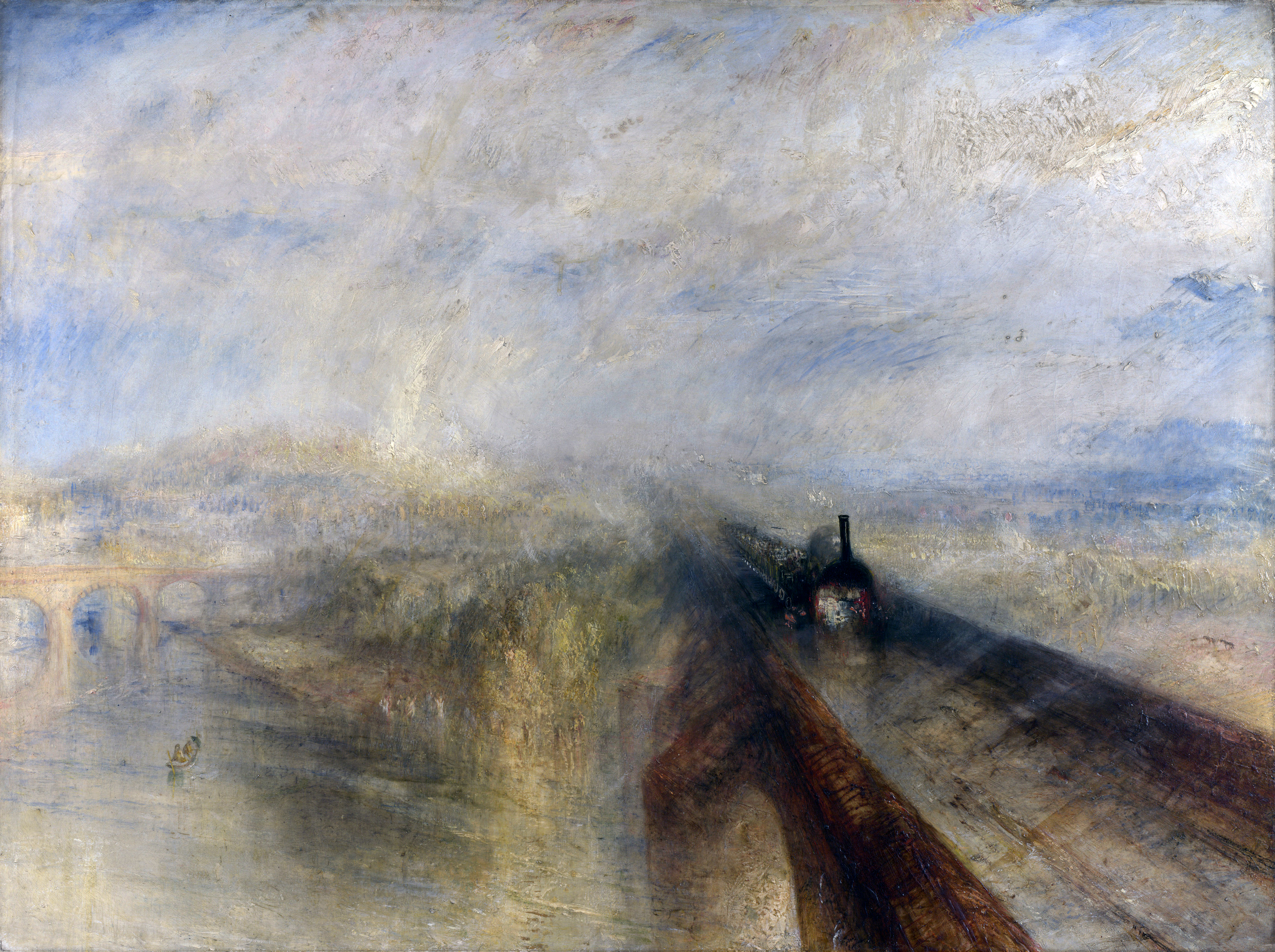
Try this: stand far back from a Turner and let it blur. The image doesn’t dissolve — it intensifies. That’s what he was after.